
World
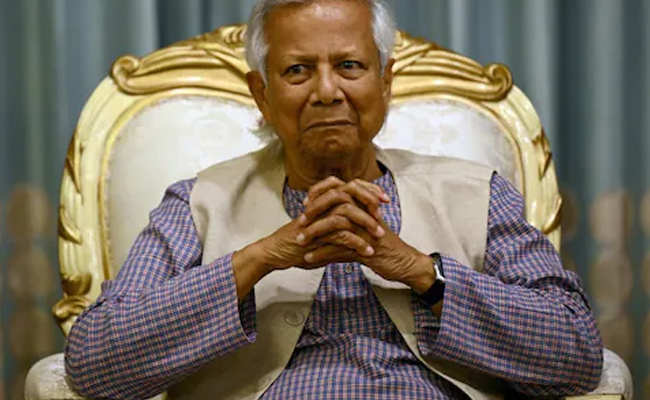
Bangladesh appears to have forgotten its past—how it was formed with India’s support and the sacrifices of Indian soldiers. It is now betraying the very country that extended a helping hand. Nobel laureate and interim head of the Bangladesh government, Muhammad Yunus, is acting without even basic gratitude and is spewing venom against India.
It is well known that many Hindus have been killed in Bangladesh so far. Hindus in that country are living in constant fear. While attacks on Hindus continue, instead of stopping the violence, the government there is standing by the accused. It has begun taking steps to protect killers and agitators.
For this purpose, a special ordinance has been issued. After Sheikh Hasina, the interim government formed under Muhammad Yunus is functioning in an anarchic manner. Since this government came to power, protests have increased. Protesters have attacked and killed police personnel, security forces, Hindus, and political opponents. These attacks were particularly intense during July and August last year and continued even afterward.
In these incidents, many Hindus were killed, and several government and private properties were extensively damaged. Instead of taking action against those responsible, the Yunus-led government has now extended protection to them. It issued the Protection and Liability Determination Ordinance 2026. Under this ordinance, those involved in the violence will be protected.
No strict action can be taken against them. All civil and criminal cases registered so far against the accused will be withdrawn, and no new cases can be filed. There will be no action against those who killed police personnel, Hindus, minorities, or Awami League members. Islamist and extremist killers will now roam freely.
During the protests against former Prime Minister Sheikh Hasina, agitators indulged in severe violence. Police stations were set on fire, and targeted killings were carried out. For nearly a year and a half, protests against Hasina’s rule continued. Reports say that up to October last year, 44 police personnel were killed in these incidents.
On August 5, 2024, the Bangladesh government collapsed. Following the protests against her, Sheikh Hasina fled to India and sought refuge.
In Bangladesh, minority Hindus are generally viewed as supporters of Sheikh Hasina’s Awami League. That is why political rivals often target Hindus. After Sheikh Hasina left the country, reports of attacks on Hindu properties and temples flooded social media. The persecution of Hindus in Bangladesh reflects deeply entrenched extremism within the country’s social and political structure.
Continuous anti-India sentiment has further worsened the environment for minorities. Hostility toward Hindus is increasingly portrayed not as extremism, but as “ideological resistance.” The language of reforms and student movements is often used as a pretext to advance extremist agendas and target minorities.
It is evident that most of the killings that took place last December were based on allegations of “blasphemy.” Such accusations have become a powerful tool to target Hindus. Without any evidence or official investigation, mobs are incited and violence is provoked purely on allegations. Religion has become a central political weapon.
Radical Islamist groups, their affiliates, and even student organizations have relied on religious nationalism to mobilize support ahead of elections. Lacking strong governance agendas, these groups depend on identity-based mobilization and make Hindus easy targets.
Advertisment