
India News
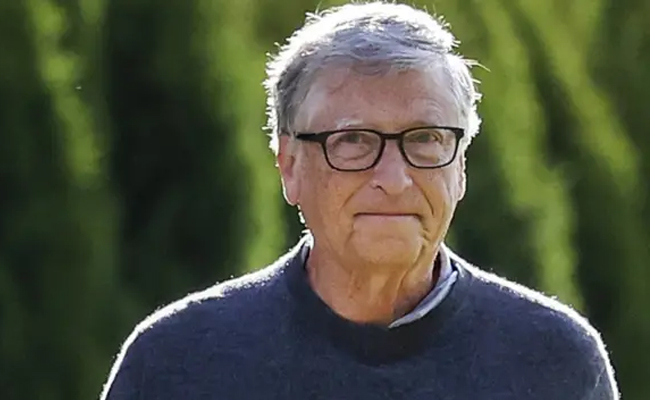
Bill Gates is a name that needs no special introduction. Known globally as a tech leader and the founder of Microsoft, Gates recently shared a cautionary message that has raised concerns among the youth.
Speaking to Indian national media on the sidelines of the World Economic Forum meeting in Davos, Bill Gates warned that the world is set to undergo a dramatic transformation over the next four to five years. As part of this change, millions of jobs could disappear, primarily due to the rapid rise of Artificial Intelligence (AI).
He specifically pointed out that white-collar jobs are under significant threat from AI. Gates said the job market would transform much faster than expected, with AI reshaping employment across industries.
He noted that productivity in the software development sector has already increased significantly, while AI is replacing lower-skilled jobs in logistics and call centers. Gates added that the impact of AI would not be limited to white-collar roles alone but would also affect blue-collar jobs. At the same time, AI is already playing a major role in disease diagnosis and prevention.
Gates emphasized that revolutionary changes are taking place in the education system as well, leading to widespread transformation. However, he expressed concern that governments are not paying adequate attention to these developments. Without proper regulation of AI, there is a serious risk of negative impacts on employment systems, recruitment processes, and economic equality, he warned. He reiterated these concerns in his “The Year Ahead” letter.
He cautioned that what we have seen so far is only the beginning, and that unexpected developments are on the horizon. Gates warned that inequalities could worsen if these challenges are not addressed. To tackle them effectively, he stressed the need for collective policies and international cooperation.
Referring to comments he made in September last year, Gates said AI is already capable of performing many tasks, including disease diagnosis and prevention. While AI is driving transformative changes in education and other sectors, he criticized governments for failing to keep pace with these developments.
However, Gates also reassured that AI would not eliminate jobs in certain key fields for at least the next 100 years. He identified coding, biology, and the energy sector as areas where human expertise will remain indispensable.
Clarifying misconceptions about coding, Gates explained that coding is not just about writing code, but about solving complex problems. It requires creativity and innovative thinking. While AI can assist with debugging and routine tasks, only the human mind can drive true innovation and creative problem-solving.
In the field of biology, Gates said AI can significantly help analyze data, understand diseases, and accelerate research. However, creating new theories, making groundbreaking discoveries, and providing new directions for research are tasks that only humans can perform. Human creativity, he stressed, will always be essential in this field.
Gates also described the energy sector as relatively safe from AI-driven job losses. While AI can enhance efficiency, critical decision-making during crises, long-term strategic planning, and effective management of energy resources require human judgment. Therefore, experts in this field cannot be replaced by AI.
In a previous interview, Gates reiterated that AI would never fully replace professionals in these three key sectors. Although AI tools like ChatGPT can assist in writing code and handling certain programming tasks, they lack precision, logic, and advanced problem-solving skills. Complex software design still depends heavily on human expertise.
Unexpected challenges require programmers to step in, and AI cannot replace them. Similarly, Gates firmly stated that AI does not have the capability to replace biologists. While it can be a useful tool for disease diagnosis and DNA analysis, it lacks the creativity required for scientific innovation.
The same applies to energy experts. AI has not yet achieved full automation in this field, and therefore cannot replace human professionals. Gates concluded that AI should be seen as a powerful support tool, not a complete replacement for human intelligence and creativity.
Advertisment