
Movie News
Usually, the prices of land and houses increase once every three years. During a real estate boom, prices may be revised once a year. But did you know there is a place where apartment prices are increasing every single week?
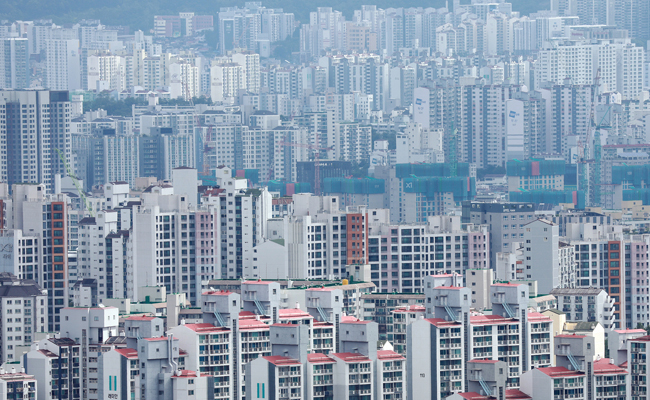
Yes—in Seoul, the capital of South Korea, apartment prices are rising on a weekly basis. According to the Korea Real Estate Board, apartment prices in Seoul have increased for 52 consecutive weeks. Despite strict regulations on home loans and strong government pressure on buyers to cool the market, the real estate sector in Seoul continues to surge.
Even with tough restrictions in place, people are still rushing to buy apartments. As a result, flat prices in Seoul have tripled within a year.
To compare, in Mumbai, homebuyers can get home loans covering up to 80% of the market value, and even 90% from non-banking financial institutions. In Seoul, however, banks provide home loans of only 40% of the property value. This means if you want to buy a flat worth Rs 1 crore, you will get a loan of only Rs 40 lakh.
South Korea is not alone in tightening housing loans. Countries like New Zealand, Australia, Canada, and Singapore have also imposed strict rules to control real estate prices in their capital cities. In cities like Hong Kong, stamp duty is extremely high—so high that the amount paid as stamp duty there could buy a flat on the outskirts of Hyderabad.
Seoul currently has a population of about 9.3 million, which is higher than New York City’s population. However, Seoul is geographically much smaller than New York, highlighting the immense pressure on the city.
Many young people in Seoul now prioritize buying a home before getting married. A middle-class employee who worked for 30 years in Seoul found it impossible to continue living in the city after retirement and had to move outside the capital with his family.
Since 2019, more than half of South Korea’s population has been concentrated in the Greater Seoul Metropolitan Area. Surrounding regions such as Incheon and Gyeonggi Province are already overcrowded. Correcting this geographical imbalance has become a major challenge for the government.
This situation has arisen largely due to the lack of decentralised development and excessive focus on Seoul. Migration to Seoul began in the 1970s and has now reached extreme levels. From 2010 onward, the government started shifting ministries, agencies, and public-sector companies out of the capital. In 2010, Sejong City was declared a new administrative capital and developed rapidly. However, the pressure on Seoul has still not eased.
Seoul boasts an extensive transport network, top universities, and a large number of high-paying companies. Other parts of the country lack similar levels of development, which is why young people continue to queue up to move to the capital. With limited options left, the government has announced plans to add 60,000 new apartments by 2027 to address the housing crisis.
Advertisment